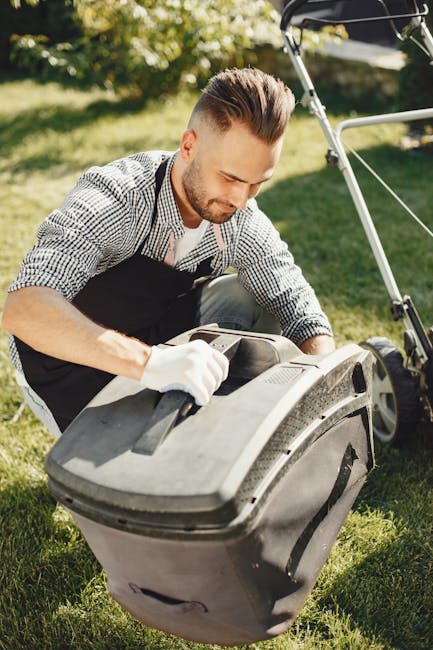
Licensed insured gardeners in Clapham proof and why it matters
Hiring a gardener should make life easier, not create a fresh set of worries. Yet plenty of Clapham homeowners, landlords, and managing agents only think about insurance or proof of licensing after something has gone wrong. A broken fence panel, a slipped ladder, an injured worker, or a job left half-finished can quickly turn a simple tidy-up into an awkward and expensive mess.
That is why licensed insured gardeners in Clapham proof and why it matters is not just a checkbox topic. It is about trust, safety, accountability, and knowing you are dealing with a professional who can do the work properly. In this guide, we will unpack what that proof actually looks like, why it matters in real terms, and how to check it without making the process feel like an interrogation. To be fair, it is easier than most people think.
If you are comparing providers for regular upkeep, one-off clearance, or a more involved project, this article will help you spot the difference between polished sales talk and real reassurance.
Table of Contents
- Why proof matters in everyday garden work
- How gardener licensing and insurance proof works
- Key benefits and practical advantages
- Who this is for and when it makes sense
- Step-by-step guidance
- Expert tips for better results
- Common mistakes to avoid
- Tools, resources and recommendations
- Law, compliance, standards and best practice
- Options, methods and comparison table
- Case study or real-world example
- Practical checklist
- Conclusion
- Frequently asked questions
Why Licensed insured gardeners in Clapham proof and why it matters Matters
Garden work looks gentle from a distance. Trim a hedge, mow a lawn, clear some green waste, maybe lift a few old sleepers. In reality, it often involves powered tools, ladders, sharp cutting equipment, uneven ground, heavy bags, awkward access, and the occasional hidden hazard buried in the border. A gardener may spend most of the day outdoors, but the risk is not zero just because the work is outside.
Proof matters because it tells you two things at once: first, that the gardener is operating professionally; second, that they have thought through what happens if something goes wrong. Insurance is the obvious part, but proof can also include clear paperwork, a transparent business identity, health and safety practices, and terms that set out responsibilities on both sides. That is the sort of detail that can save a lot of back-and-forth later.
In Clapham especially, where gardens can be compact, shared, or tightly bordered by neighbouring properties, small mistakes can have outsized consequences. A ladder placed badly in a narrow side return, a hedge cut too aggressively over a boundary, or a tree branch dropped without enough clearance can become a neighbour dispute in an afternoon. Nobody wants that. Nobody.
There is also the comfort factor. When a gardener can show proof cleanly and confidently, you feel it straight away. The conversation becomes calmer. You are not guessing. You are not hoping. You know who is entering your property, what they are covered for, and what standard of work they are likely to deliver. That reassurance matters just as much for regular maintenance as it does for bigger jobs like garden clearance or landscaping.
Practical takeaway: proof is not about bureaucracy for its own sake. It is about reducing risk, creating accountability, and making sure the person working on your garden is set up to protect both your property and their own team.
How Licensed insured gardeners in Clapham proof and why it matters Works
Let's break it down in plain English. "Licensed" and "insured" are often used together, but they are not quite the same thing. Insurance is the easiest to understand: it is financial protection if damage, injury, or another covered event happens during the job. Licensing is trickier in gardening because not every garden service requires the same sort of formal licence. Some work is mainly about lawful trading, competence, and compliance with the relevant rules rather than one universal gardening licence.
So when a customer asks for proof, they are usually looking for a sensible combination of evidence, such as:
- business identity and trading details
- public liability insurance evidence
- employer insurance where a team is involved
- health and safety procedures
- clear written quotes and terms
- service-specific competence for higher-risk tasks
That is the practical version. Not every garden task needs the same level of documentation, but the more complex or risky the job, the more important it becomes to verify what you are being told. For example, ordinary lawn mowing usually carries less risk than tree work, but even a standard mowing visit can still involve stones flicked up by blades or damage to edging if equipment is used carelessly. Small jobs can still create big frustrations.
A good provider will not get defensive when you ask for proof. They will understand why you asked. Ideally, they will explain their cover, outline what is included, and clarify any exclusions in calm, normal language. That is a good sign. If everything suddenly becomes vague, rushed, or oddly secretive, well, that tells you something too.
For larger outdoor projects, proof becomes even more important. If you are considering structural changes or a more involved garden redesign, services like landscaping or landscape gardening may involve digging, lifting, machinery, and coordination with neighbours or access routes. The stakes are simply higher.
Key Benefits and Practical Advantages
The value of checking proof is not theoretical. It plays out in ordinary moments, the kind that happen on a damp Wednesday morning with wheelbarrows at the gate and tea going cold indoors.
1. Better protection for your property
Insurance helps protect you if accidental damage occurs. That can include a cracked slab, a damaged gate latch, or a broken planter. It will not prevent mistakes, but it may reduce the cost and stress if one happens.
2. Clearer accountability
When a gardener is properly set up, there is a trail of responsibility. You know who to contact, what was agreed, and what should happen if a problem arises. That is especially useful for recurring services such as garden maintenance, where the relationship matters over time.
3. Safer work practices
Insurance and proof usually go hand in hand with safe work habits. Providers who take paperwork seriously are often more disciplined on site too. Not always, but often enough that it is worth paying attention.
4. Reduced neighbour tension
In terraced streets and shared boundary settings, proof can be the difference between a neat, professional job and a long conversation over a fence. If something does go wrong, it is easier to handle when the gardener has a proper process.
5. Easier commercial or landlord decision-making
If you are a landlord, letting agent, or property manager, proof is not just helpful; it is part of sensible due diligence. It supports internal records and reduces the chance of headaches later.
6. Confidence with specialist tasks
Where services like tree lopping and removal or heavier clearance work are involved, you want to know the provider understands both the practical and safety side of the job. That confidence matters before the first cut is even made.
7. Better value over time
Cheaper is not always cheaper. If a low-cost quote comes with no proper proof, the real cost could appear later through poor workmanship, delays, disputes, or remedial work. The budget line looks tidy until it does not.
Expert summary: the real benefit of proof is not paperwork itself. It is the confidence that the person entering your garden has the right cover, the right habits, and the right level of responsibility for the work they are doing.
Who This Is For and When It Makes Sense
This topic matters to more people than you might think. If you own a small front garden, you may assume the risk is tiny. Fair enough, but even a quick visit can create an issue if the provider is careless. If you manage a larger property, the need for proof becomes more obvious.
This is especially relevant if you are:
- a homeowner comparing local gardening services
- a landlord preparing a property for new tenants
- a managing agent handling regular outdoor upkeep
- a business owner maintaining frontage or external space
- a resident arranging one-off clearance after seasonal overgrowth
- a customer booking more complex work that involves tools, access, or waste removal
It makes the most sense when the work involves a decent amount of activity, not just a quick plant pot tidy. For example, after months of growth, a garden may need garden clearance before it can be maintained properly. In that sort of scenario, the work is usually more physical, more time-sensitive, and a bit more unpredictable than people expect.
It also makes sense when you are inviting someone onto the property while you are not there. Plenty of people do this during working hours, especially in London. Nothing wrong with that, but if you are handing over keys or access instructions, proof becomes part of the trust conversation. Simple as that.
Step-by-Step Guidance
If you want to check a gardener properly without making it awkward, use this process. It is practical, quick, and surprisingly effective.
- Ask what cover they have
Start with a direct but calm question. Ask whether they carry public liability insurance and, if they have staff, employer liability cover too. - Request evidence before the job starts
A professional provider should be able to share proof in advance. That may be a certificate, policy summary, or written confirmation of cover. - Check the business details
Make sure the name on the documents matches the name you were given. If anything seems inconsistent, pause and ask why. - Clarify what the work includes
List the job clearly. For example, hedge cutting, border tidying, lawn care, or waste removal should all be understood before anyone starts. A service like hedge trimming sounds simple until you are discussing height, shape, disposal, and access. - Ask about exclusions
Some insurance policies do not cover certain activities, heights, plants, machinery, or subcontracted work. Better to know now than after a problem. - Get the quote in writing
Written pricing makes expectations much clearer. It also gives you a better basis for comparing providers. You can start with pricing and quotes if you want a clearer breakdown of how a professional service structures work. - Confirm waste handling if relevant
If the job includes green waste, rubble, or mixed debris, ask how it will be handled. Some work may also involve sustainability or recycling considerations, which is where recycling and sustainability becomes relevant. - Review the terms and conditions
Yes, people skip this all the time. Then they act surprised. Don't be that person. Even a quick look at the terms and conditions can clarify payment timing, cancellations, and responsibilities.
If the provider answers clearly and consistently, that is a positive sign. If they become evasive after the first question, treat that as a signal, not a challenge to overcome.
Expert Tips for Better Results
Over the years, the best customer experiences tend to come from people who ask sensible questions early and stay specific. Not aggressive. Just specific.
Ask for the right proof, not every document under the sun. You do not need to conduct a courtroom cross-examination. A straightforward request for insurance evidence, business identity, and service scope is usually enough.
Match the proof to the job. A small lawn tidy and a major tree job are not the same thing. If the task is more technical or hazardous, the provider should be able to explain the relevant safeguards. That is especially true for work around heavier equipment or elevated cutting.
Use the first conversation to judge responsiveness. A reliable gardener tends to be organised in small ways: prompt replies, clear wording, realistic timings, and a willingness to answer basic questions without drama. That alone tells you quite a lot.
Check how they handle boundaries. Not just physical boundaries, either. Good providers are clear on what is and is not included. They do not overpromise. They do not waffle. You get a proper answer, even if it is a short one.
Think in terms of risk, not just price. The lowest quote is not necessarily the best value if it comes with weak documentation or a vague service promise. In the long run, peace of mind has value. Real value.
Pay attention to the odd little details. Do they ask about access? Do they want to know if pets are in the garden? Do they mention site safety? Those are the sorts of small questions that suggest someone has done this before and knows what can go wrong on a normal day.
Use service pages as a guide to fit. If you are comparing regular upkeep, one-off tidy work, or more specialist improvements, browsing service details such as services overview can help you judge whether the provider's offer matches what you actually need. No point buying a full redesign if you only needed a seasonal reset.
Common Mistakes to Avoid
People usually make the same handful of mistakes when checking gardeners. None of them are unusual. That is what makes them annoying.
- Assuming all gardeners are automatically insured
Do not assume. Ask. Friendly, simple, direct. - Confusing a website claim with proof
A statement on a page is not the same as an actual insurance certificate or written confirmation. - Choosing only on price
Budget matters, of course it does, but it should not be the only factor. - Ignoring the scope of the work
What seems like a small job may involve more risk than expected, especially if there is access through narrow passages or work near structures. - Not asking about waste and disposal
Garden waste, clippings, soil, and broken branches all need to go somewhere. If the answer is vague, keep asking. - Forgetting written confirmation
Verbal agreements are easy to misremember. A short written quote is much safer. - Overlooking the terms
Especially for repeat visits or bigger jobs. A couple of minutes now can save a longer headache later.
A tiny bit of scepticism is healthy. Not rude scepticism. Just enough to protect yourself.
Tools, Resources and Recommendations
You do not need specialist equipment to verify a gardener's proof, but a few simple tools help keep things organised:
- Notes app or email thread to keep quotes and answers together
- Camera on your phone to record the garden's condition before work starts
- Short checklist for insurance, access, scope, waste, and payment
- Copy of agreed instructions if you will not be at home during the visit
It also helps to know where to look on a company website when comparing services. If you want background on the business itself, the about us page is usually a sensible place to start. For practical help with scheduling or enquiries, the contact us page gives you the obvious next step without making things complicated.
For some customers, policy pages matter too. If you care about how a business handles things like data, payments, complaints, or safety, pages such as health and safety policy, insurance and safety, and complaints procedure can offer useful reassurance. They do not replace direct proof, but they do show whether a business takes itself seriously.
And yes, a good gardener should be able to explain the work in simple language. If you need a translator for the quote, that is not ideal.
Law, Compliance, Standards, or Best Practice
Gardening services in the UK operate in a space where some duties are straightforward and some are more situational. There is not one single "gardener licence" that covers every task. In practice, what matters is lawful trading, suitable insurance, competent work, and compliance with any relevant safety obligations.
For example, if a job involves employees, employer liability insurance may be expected. If the work includes cutting trees, using elevated access equipment, handling waste, or operating machinery, a higher standard of competence and safety planning is sensible. Different tasks carry different levels of risk, and professional best practice should reflect that.
Good practice also includes:
- clear written scope of work
- safe use and storage of tools
- appropriate personal protective equipment where needed
- care around boundaries, paving, and neighbouring property
- responsible waste handling
- transparent payment terms
If the work involves tree lopping, removal, or other more demanding tasks, it is wise to ask about the specific method and safety controls before work begins. The point is not to be difficult. The point is to know the job will be done properly and safely.
One more thing: if a provider has useful public-facing documents, that is usually a sign they have thought through their operating standards. A business that is organised with its policies often tends to be organised on site too. Not always, but often enough to notice.
Options, Methods, or Comparison Table
When people compare gardeners, they are often weighing up more than just the quote. Here is a simple way to think about the options.
| Option | What it usually means | Main risk | Best use case |
|---|---|---|---|
| Unverified freelancer | May offer lower prices but little paperwork | Unclear cover, unclear accountability | Only if the task is very small and you are comfortable with the risk |
| Local gardener with basic proof | Can show insurance and a clear business identity | May still need clarification on exclusions | General garden upkeep, mowing, tidy-ups, hedge work |
| Established insured provider | Usually offers stronger documentation and clearer process | May cost a little more upfront | Recurring maintenance, larger clearances, specialist or higher-risk work |
This is not about snobbery. It is about matching risk to provider quality. If you only need a simple seasonal tidy, you may not need a highly complex service model. If you are planning a larger project, or you want a provider who can support repeat visits over time, stronger proof and clearer process are worth paying for.
For some outdoor improvements, you may also compare garden work against related services such as decking services. That sort of job sits closer to construction than basic maintenance, which means the proof and process conversation becomes even more relevant. Different task, different risk profile.
Case Study or Real-World Example
Here is a typical Clapham scenario. A homeowner had a back garden that had been left to go a bit wild over a wet spring. Nothing dramatic, just the usual: long grass, ivy creeping, a hedge leaning a little too confidently over the boundary, and a compost heap that had become more "feature" than "storage."
They found two quotes. One was cheaper and promised a quick turnaround. The other was slightly higher but included written scope, insurance confirmation, and a clear explanation of how waste would be removed. The cheaper option sounded tempting, naturally. Who does not like saving money?
But after asking a few questions, the difference became obvious. The low-cost provider could not clearly explain what would happen if a fence panel was damaged, nor could they outline how the cuttings would be handled. The other provider answered plainly, confirmed their cover, and set expectations for access and disposal. The choice became easier.
The result was not flashy. It was simply calm. The garden was cleared, the hedge was tidied neatly, and the homeowner knew exactly who was responsible for what. No drama. No awkward follow-up. Just a well-handled job and a much more pleasant view from the kitchen window the next morning.
That is the part people often miss: proof is not exciting, but the absence of problems is very satisfying.
Practical Checklist
Before hiring a gardener in Clapham, run through this quick checklist. It is simple, but it covers the essentials.
- Have I confirmed the provider's full business name?
- Have I asked for evidence of insurance?
- Do I know what the job includes and excludes?
- Is the quote written down clearly?
- Have I checked how waste will be removed or recycled?
- Do I understand the payment terms?
- Have I noted any access issues, pets, gates, or boundary concerns?
- Do I know who to contact if something changes on the day?
- Have I reviewed any relevant policy pages or service information?
- Do I feel comfortable with the level of detail and communication?
If you can tick most of those off, you are in much better shape than the average customer who just hopes for the best. Hope is nice. It is not a plan.
Conclusion
Licensed insured gardeners in Clapham proof and why it matters comes down to one simple idea: trust should be visible, not assumed. When a gardener can show genuine proof, explain their cover clearly, and set out the work in plain English, you gain more than reassurance. You gain control over the decision.
That matters whether you are booking a light tidy-up, a recurring maintenance schedule, or a more involved clearance or landscaping project. The right proof helps protect your home, your budget, your neighbours, and your peace of mind. And honestly, peace of mind is underrated. Very underrated.
So ask the questions early, keep the answers in writing, and choose the provider who makes things feel straightforward rather than mysterious. Good service tends to feel calm from the start. That is usually a sign you are in safe hands.
Get a free quote today and see how much you can save.
Frequently Asked Questions
What proof should I ask a gardener for in Clapham?
Ask for evidence of public liability insurance, a clear business name, written quote details, and any relevant safety or service information. For larger or higher-risk work, ask how they manage access, tools, and waste too.
Does a gardener need a licence in the UK?
Not every gardening task requires a special licence. In many cases, the practical issue is whether the gardener is trading properly, insured, and competent for the work being carried out. More specialist tasks may call for additional qualifications or controls.
Why does insurance matter so much for garden work?
Insurance matters because garden work can still involve accidental damage or injury. Even a routine job can lead to problems if tools slip, a slab cracks, or a neighbour's property is affected. Insurance helps reduce the financial fallout.
Is public liability insurance enough on its own?
It is important, but not always the whole picture. If the gardener employs staff, employer liability cover may also matter. You should also look at written scope, safety practices, and how clearly the provider explains exclusions.
How can I tell if a gardener is trustworthy before booking?
Look for clear communication, consistent business details, written quotes, and a sensible response to proof requests. Trustworthy providers usually answer direct questions without making the process awkward.
Should I ask for proof before the gardener arrives?
Yes. It is best to ask before work starts, ideally when you receive the quote or confirm the booking. That way there is no last-minute uncertainty once tools are already on site.
What if the gardener refuses to show proof?
That is a warning sign. If someone cannot or will not provide basic evidence, it is usually wiser to walk away and choose another provider. You do not want to discover the reason after something has gone wrong.
Does proof matter for small jobs like lawn cutting?
Yes, although the level of risk may be lower. Even small jobs can cause accidental damage or disputes, especially in tight urban gardens. A quick job is still worth doing properly.
How does proof help with larger services like clearance or tree work?
For larger jobs, proof is even more valuable because the risk is higher. Services such as garden clearance, hedge trimming, and tree lopping and removal can involve tools, waste, height, and more complex site conditions.
Should I read the terms and conditions before hiring?
Yes. It only takes a few minutes and can save confusion later. Terms often explain payment timing, cancellations, responsibilities, and what happens if the scope changes.
Can a professional gardener still be affordable?
Yes. Professional and affordable are not opposites. A well-run provider can still offer good value, especially if the quote is clear and the work is done efficiently the first time.
What is the most common mistake people make?
The biggest mistake is usually choosing on price alone and not asking for proof. A low quote can look attractive, but if it comes with weak paperwork or vague promises, the saving may not hold up for long.